

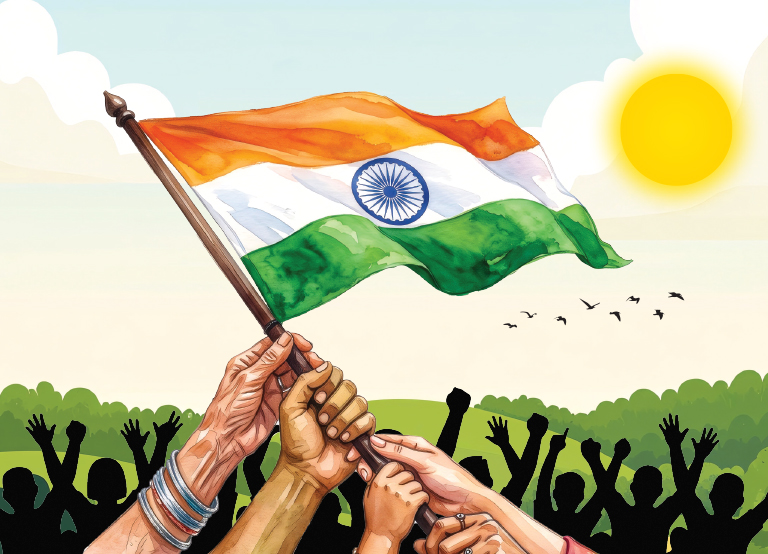
The British government understood that ideas could be as powerful as weapons. Fearing the rise of a united Indian identity, it kept a close watch on newspapers, pamphlets, speeches and radio broadcasts. Laws such as the Vernacular Press Act of 1878 and the Newspaper (Incitement to Offences) Act of 1908 were introduced to curb the spread of nationalist ideas, but freedom fighters continued to find new ways to keep the message moving.
‘DO OR DIE’ SECRET MISSIONS
Underground Radio
In August 1942, at the height of the Quit India Movement, a secret radio station went on air for the first time. The driving force behind it was Usha Mehta, a courageous young woman in her early twenties who believed that the freedom movement needed a voice that the British could not silence. Within a week, she and a group of fellow freedom fighters–including Chandrakant Babubhai Jhaveri, Vithaldas K Jhaveri, Nanka Motwane and Nariman Printer–helped establish what came to be known as the Congress Radio. The station was created to spread news about India’s freedom struggle and inspire people across the country to join the movement. Its broadcasts carried reports of protests, arrests and other developments that were often censored by the British authorities. Prominent national leaders also used the station to share messages with the public.
Operating the radio station was extremely risky. To avoid detection, the team frequently changed locations while continuing their broadcasts. The police relentlessly searched for them and eventually raided several radio shops in an attempt to trace the source of the transmissions. Usha Mehta and her colleagues managed to move their equipment and set up a new transmitter, allowing them to continue broadcasting for a short while longer.
The final broadcast ended dramatically. As ‘Vande Mataram’ played over the airwaves, the police raided the studio, seized the equipment and arrested Usha Mehta along with several members of the team. She was sentenced to four years in prison and was released in April 1946.
Many years later, in 1998, Usha Mehta was awarded the Padma Vibhushan, India’s second-highest civilian honour, in recognition of her contribution to the freedom struggle and her service to the nation.
Lectures and Print Media
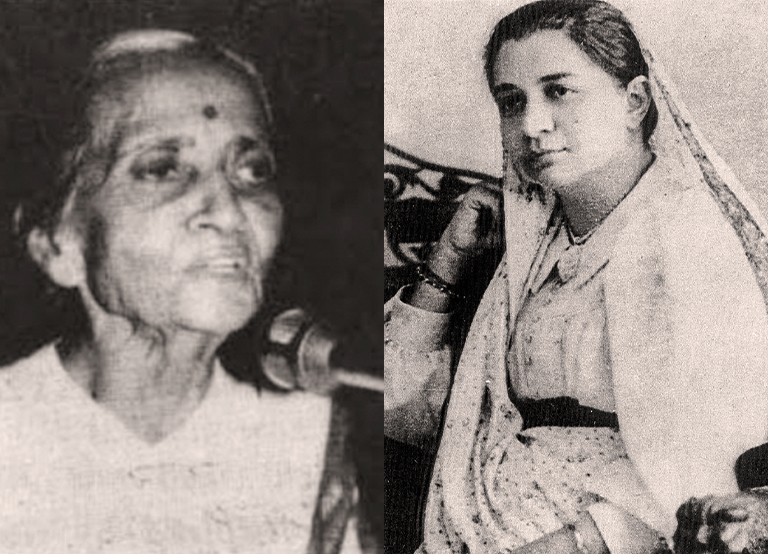
Many key political leaders were arrested for their radical ideas to mobilise the masses against colonial rule. Mahatma Gandhi was arrested due to his well-known Quit India Movement speech, while Peer Ali Khan caught the police’s attention as he distributed rebellious pamphlets and secret messages through his bookshop. Other notable names who came under British government scrutiny include Bal Gangadhar Tilak for his newspapers ‘Kesari’ and ‘Mahratta’, Mahatma Gandhi for ‘Young India’ and ‘Harijan’, Sisir Kumar Ghosh for ‘Amrita Bazar Patrika’ and Maulana Abul Kalam Azad for ‘Al-Hilal’.
While speeches and newspapers spread ideas within India, Bhikaiji Cama helped carry the message of freedom beyond India’s borders. Best known for unfurling an early version of the Indian national flag in Germany in 1907, she also campaigned tirelessly against British rule through lectures and public meetings in Europe. After moving to Paris, her home became a meeting place for revolutionaries and anti-colonial activists. She supported Har Dayal in launching the newspaper ‘Bande Mataram’, whose copies were secretly circulated in India. Through her speeches, publications and international network of supporters, Cama helped ensure that India’s demand for freedom was heard around the world. For her contribution, she is remembered as the ‘Mother of the Indian Revolution’.
THE SECRET LANGUAGE OF FREEDOM
When speeches and newspapers came under scrutiny, the rebels discovered new and creative ways to keep ideas moving, such as coded languages, objects, plays, songs and so on.
Coded Languages
Mygurudu is a secret language that was predominantly spoken in some parts of Malabar. While the exact origin is not widely known, the word ‘Mygurudu’, supposedly originating from ‘mozhi kurudu’, means ‘misleading with words’. It is believed that this coded language was used by many rebels in Kerala to trick the police. Leaders in Kerala taught the language to their group and instructed them to use this language to communicate; in fact, a few Malayalam letters were swapped with English letters, making it more complicated to decipher.
Indian Breads (Chapatis)
The Chapati Movement is one of the most mys terious episodes in the history of India’s free dom struggle. While some historians debate its historical facts and exact purpose, others interpret it as a unique way of communication, which was difficult for the British government to decode. Usually, a village leader would receive a chapati, add more and pass it on to other near by villages. It was a symbol of acceptance that meant ‘we’re all in this together’. Additionally, it meant that villagers would prepare food for the freedom fighters passing through that route.
Edible Tricolours
Edible tricolours were another unique way of showing support for India’s freedom movement. Since 1920, the British had banned unfurling the tricolour. With a focus on the Swadeshi Movement and as a symbol of protest against the British Raj, Indian sweetshop owners started making tricolour mithai. It is believed that tricolour mithais were first made at Shree Ram Bhandar, run by Madan Gopal and his family, in Banaras. The sweet reflected the saffron, white and green colours of India’s flag and became a symbol of non-cooperation and solidarity.
Red Lotus
The red lotus flower was also documented by some historians as a means of conveying secret messages, with different parts of the flower denoting different meanings. For example, the flower’s stalk symbolised a platoon and the petals symbolised the soldiers. The removal of each petal indicated the number of soldiers who were willing to stand against the British government. It is believed that this language connected villages and towns and encouraged mass movement in the absence of telegrams, letters or telephones.
Winged Messengers
The pigeon as a message-carrier was quite successful as the birds were able to deliver messages to the receiver in the quickest possible way. The message was usually written on lightweight onion paper, neatly placed inside a capsule and then tied to a pigeon’s leg.
Invisible Ink
Invisible ink, also known as sympathetic ink, was used to communicate secret messages and bypass British postal scrutiny. Organic dyes, chemical compounds and even dairy, onion or citrus juices were used to write messages. The hidden text became visible when exposed to certain chemicals, heat or moisture. Historians believe Ghadar revolutionaries like Lala Har Dayal and Rash Behari Bose often used invisible ink.

DID YOU KNOW?
Mahatma Gandhi was reluctant to sign India’s freedom petition using foreign-made ink. Believing in self-reliance, he wanted an Indian alternative. Two brothers, Nani Gopal and Shankacharya Maitra from Rajshahi (now in Bangladesh), created Sulekha Ink, which was later used to sign the Constitution of India in 1950.
RESISTANCE IN EVERYDAY LIFE
Hollowed-out Books
Anti-colonial documents, literature, ammunition and even funds were concealed in hidden compartments created by hollowing out books. The Ghadar Party even used religious books to communicate secret messages. Maulana Abul Kalam Azad and the Anusilan Samiti, which was founded by Satish Chandra Bose and Barrister Pramanath Mitra, are remembered for such secret operations. Even everyday objects like matchboxes were used for the purpose. With complete secrecy, the team at the Samiti was also involved in manufacturing arms and ammunition.
Songs and Theatre
Literature, plays and patriotic poetry played a vital role in India’s freedom struggle. Amrita Pri tam’s poetry expressed anguish over colonial rule and Partition, while Bankim Chandra Chat topadhyay’s ‘Vande Mataram’ became a pow erful symbol of patriotism. In 1943, the Indian People’s Theatre Association used theatre to promote independence and social justice. Devo tional music, too, stirred emotions and encour aged resistance against colonial rule. Muhammad Iqbal’s ‘Sare Jahan Se Achha’ celebrated India’s unity and cultural diversity, while Rabindranath Tagore’s ‘Jana Gana Mana’, later adopted as the national anthem, inspired people to think of themselves as one nation. Folk songs and traditional performance forms helped carry the message of freedom to rural India. Bihu, Bhavai, Tamasha and Nautanki were used to spread anti-colonial ideas and encourage public participation in the movement. Plays such as Bhartendu Harishchandra’s ‘Andher Nagari’ and Bijon Bhattacharya’s ‘Nabanna’ highlighted the social and economic hardships faced by ordi nary Indians under colonial rule. Traditional forms like Jatra in Bengal and Yakshagana in Karnataka also became vehicles of resistance and national awakening.
Religious Festivals
The British banned public gatherings as they were considered a breeding ground for revolutions. But the revolutionaries found a way through religious festivals and places of worship. In some villages, sounds like temple bells or drumbeats were used to alert people about the police. Temples and others place of worship became venues for secret meetings and pandals, for political lectures to invoke a spirit of patriotism. Ganesh Utsav especially became a symbol of national identity through the efforts of Lokmanya Bal Gangadhar Tilak, the advocate of Swaraj (self-rule).
Sewing and Tailoring
It wasn’t just the charkha or the khaadi movement that encouraged weaving or tailoring; sewing took on a deep political connection too as tailors supported secret missions. Tailor shops and sewing rooms were frequently used to hide anti-colonial pamphlets, flags and weapons. Tailors, including women, acted as messengers to carry secret messages across borders as they were less prone to police scrutiny.
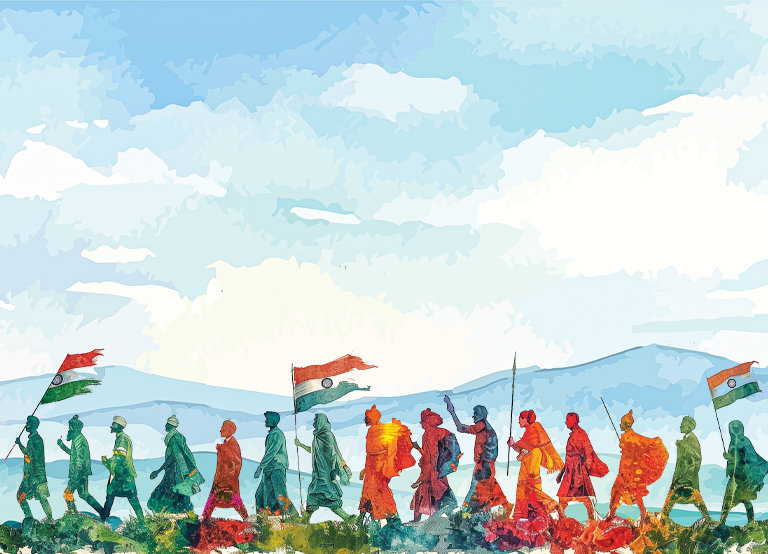
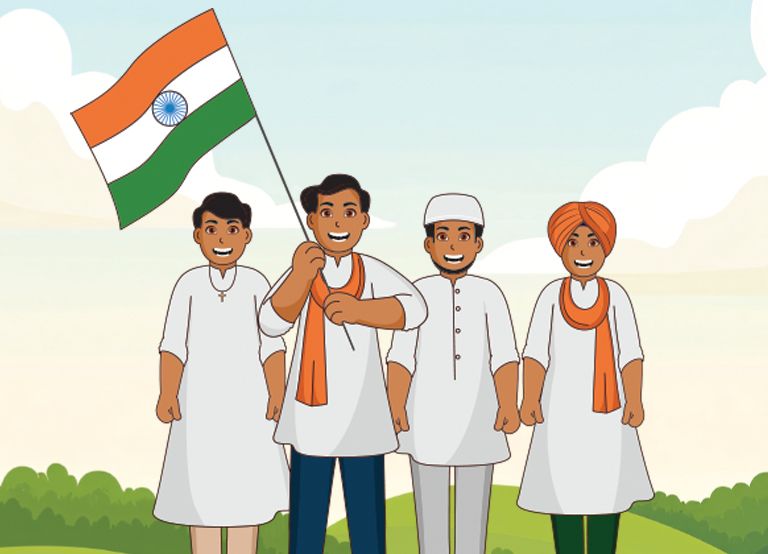
The dream of a free nation spread because it was carried not only by leaders, but also by ordinary people. Through radio broadcasts, newspapers, songs, festivals, coded messages and countless acts of courage, Indians found ways to keep the message of freedom alive. The only way freedom could go viral was because ordinary people became extraordinary messengers and found ways to inspire each other even when their voices were restricted.
When Freedom Reached India’s Villages
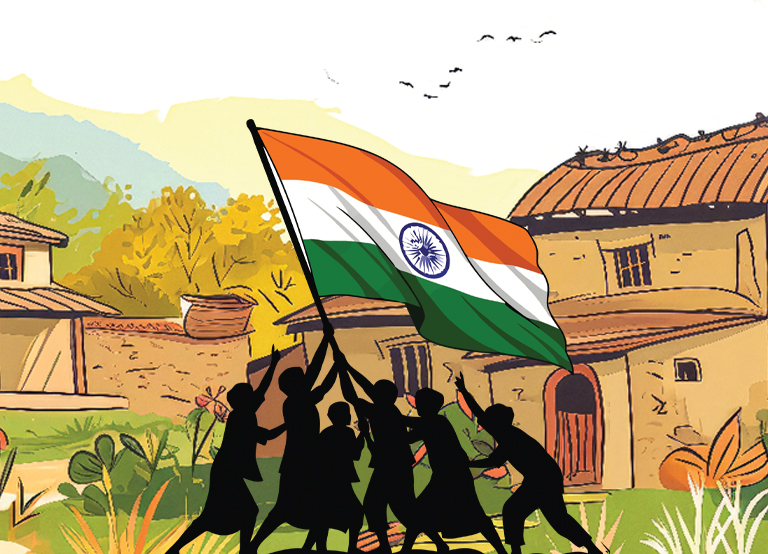
India’s freedom movement did not spread through newspapers, speeches and secret messages alone. Across forests, hills and remote regions, local leaders inspired communities to resist injustice and challenge colonial rule. Their efforts carried the idea of freedom far beyond India’s major cities, transforming it into a truly national movement. ANU CHAWLA introduces four remarkable freedom fighters who took the message of independence to some of the country’s most remote corners.
Birsa Munda
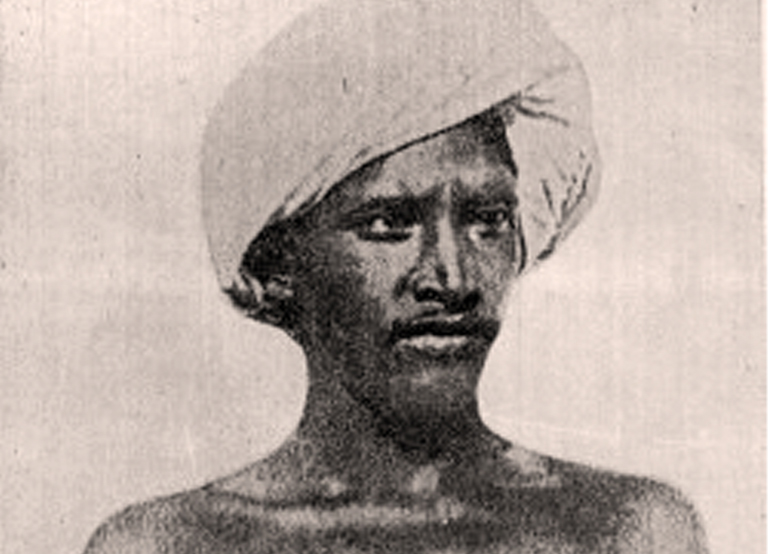
Birsa Munda, lovingly remembered as Dharti Aaba, belonged to the Munda tribe, an indigenous community from present-day Jharkhand. He encouraged many tribal communities to unite against British rule. As a spiritual leader, he discouraged the forced religious conversion of tribal communities and resisted missionary influence. Through his constant efforts, he tried to preserve traditional tribal culture, identity and rights. In 1899, he led the Munda Rebellion, which challenged British authority and sought to protect tribal rights and land. Unfortunately, Birsa was imprisoned and on June 9, 1900, he died in jail.
Alluri Sita Ram Raju
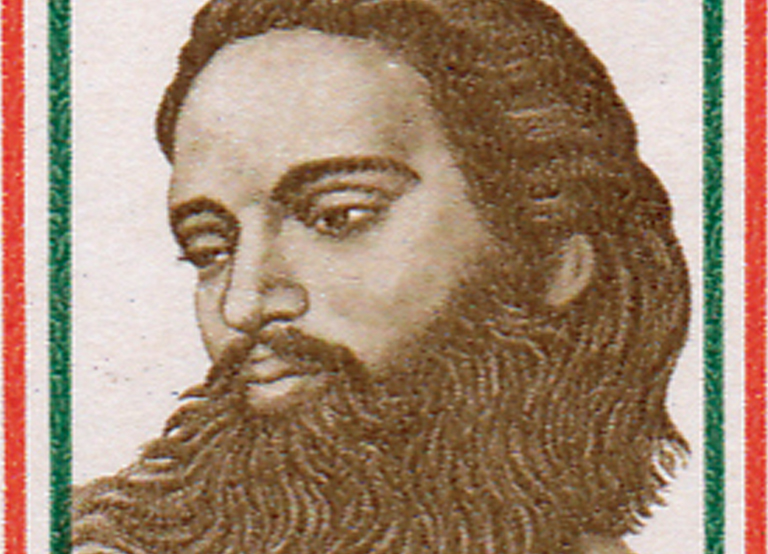
Alluri Sita Ram Raju was born on July 4, 1897, in a small village near Visakhapatnam. He had to leave his formal education due to his father’s death. As a teenager, he travelled across western, north-western, northern and north-eastern India. During his travels, he was greatly disturbed by India’s socio-economic conditions under British rule, especially in tribal areas. He eventually made the Adivasi forest regions of the Visakhapatnam and Godavari districts his home. The tribal communities here were not only poor, but also abused by police, forest and revenue officials. Raju worked for the upliftment of these Adivasis and made them aware that they were the sole owners of the forest produce. He also prepared them to fight against the Madras Forest Act, 1882. After a few initial victories, he gained more followers. Due to his expert understanding of the region, he orchestrated guerrilla resistance against British forces. Stories of his exceptionally skilful attacks on the British authorities became part of the folklore in the region. Raju became a nightmare for the British authorities until he was caught and martyred on May 7, 1924.

Jatra Bhagat
Jatra Bhagat was a freedom fighter from the Oraon tribe in Jharkhand. Like Gandhiji, he advocated non-violence, civil disobedience and self rule as tools of resistance against British rule. In 1914, he launched the Tana Bhagat Movement in Chota- nagpur, advocating socio-religious reforms to eradicate practices that were harming society. The movement also worked against the zamindari system, forced labour and various taxes imposed by the British government. Under his leadership, the tribal communities gained political consciousness, started attending Congress meetings and became part of the wider national struggle for independence.
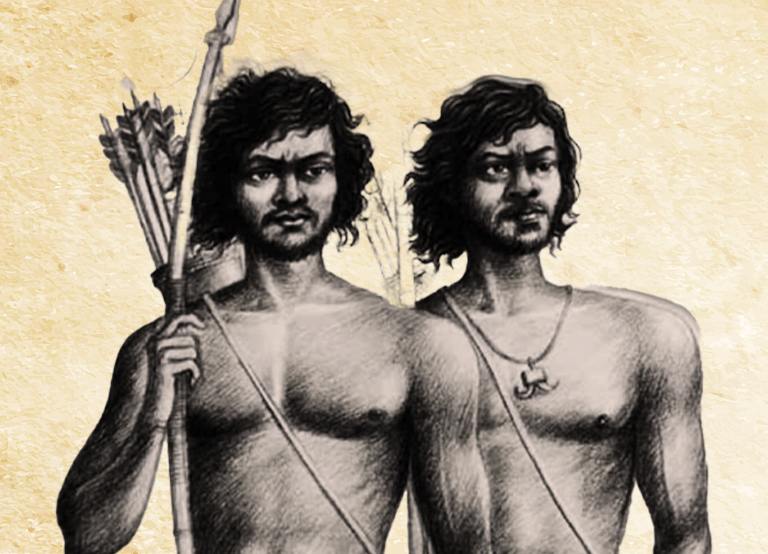
Sidhu and Kanhu Murmu
Sidhu and Kanhu Murmu were key leaders behind the famous Santhal Rebellion of 1855-56 against the British government. Along with their brothers Chand and Bhairav, they organised the Santhal community to resist economic exploitation by the British government. They managed to turn it into a mass movement, encouraging the vulnerable Santhal population to reclaim their freedom and livelihood. Under their leadership, the community rejected British authority, refused colonial taxes and established its own parallel authority. However, despite their courageous efforts and skills, they were overpowered by the British authorities and the brothers were eventually captured and martyred.
Image Source: wikipedia.org, instagram.com
Anu Chawla is an alumna of IIM-K with a master's degree from the University of Oxford, UK. Her book, ‘Padma Shri Awardees’, published by Scholastic, was nominated for the prestigious PVLF Author Excellence Awards 2024 in the Best Debut Non-Fiction category. A Dubai-based author, she conducts storytelling workshops for children. You can connect with her on Instagram @anchawla_ac

ACTIVITY: Words of Valour
Pretend you are a newspaper editor from the pre-independence era. Design a newsletter to address the political unrest of your times.

Upload your newsletter design on www.robinage.com/submit-posts to be featured on RobinAge.com
Share