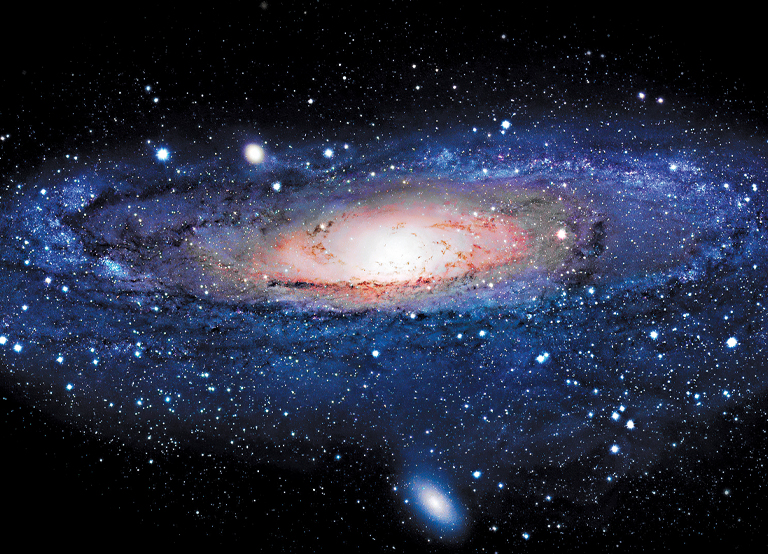
Scientists have found that the number of new stars forming in the Andromeda galaxy, a major galaxy situated approximately 2.5 million light-years from Earth, has reduced over the last 500 million years.
September 01, 2026
Scientists have found that the number of new stars forming in the Andromeda galaxy, a major galaxy situated approximately 2.5 million light-years from Earth, has reduced over the last 500 million years. For the study, scientists made use of information obtained from the Hubble Space Telescope to study the Andromeda galaxy and millions of its stars. The study found that the formation of new stars in the galaxy took place at a very high rate approximately 2 billion years ago; however, the galaxy has experienced a reduction in the rate of star formation during the past 500 million years, with a higher reduction rate observed during the past 40 million years. Scientists are examining the factors that could have led to this decline.
DID YOU KNOW? According to scientists, the Milky Way, which is our galaxy, comprises around 300 billion stars.
Andromeda Galaxy | Image for representational purposes