

June 01, 2025
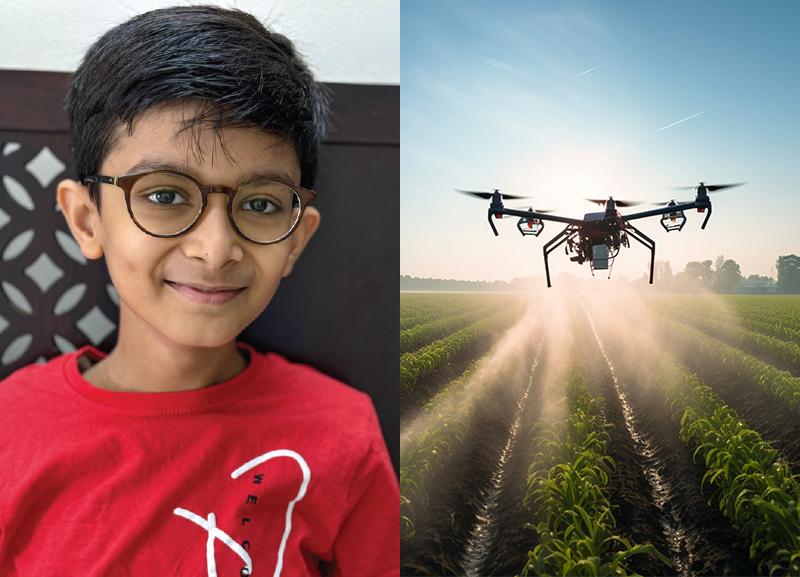
Ahaan Sinha
Class 5, Witty International School, Mumbai

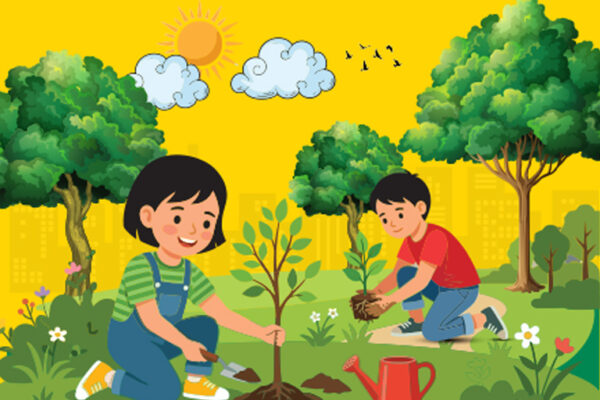
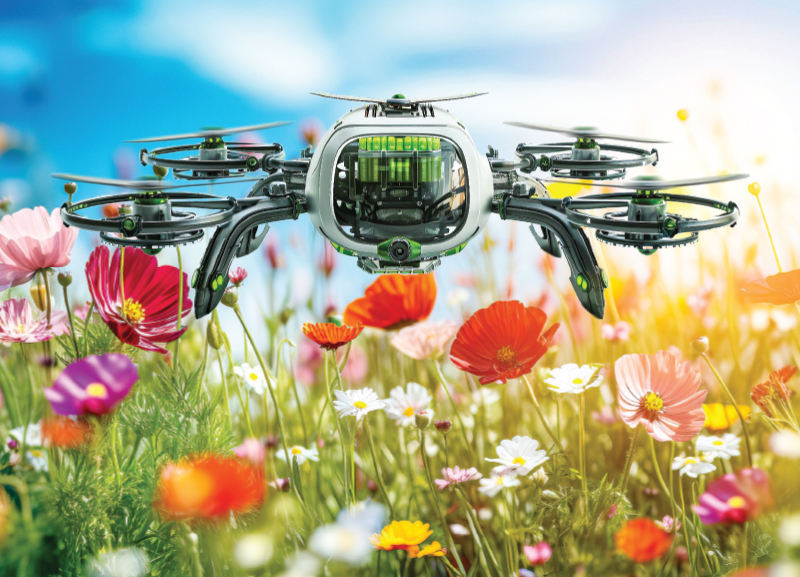
The Amazon Rainforest is in a critical state after experiencing wildfires, particularly in 2024. These fires, fuelled by drought and deforestation, have led to significant forest loss. Among the many environmental problems we face, soil pollution is a significant issue. Soil can be kept healthy by reducing tillage and adding compost or soil amendments such as lime or biochar. If I had the power to invent something to help the environment, it would be a drone with sensory robotic arms that would help enhance soil. This drone would help mix organic fertilisers with the soil and plant saplings, leading to afforestation. My invention would support farmers in cultivating more crops by maintaining soil fertility.
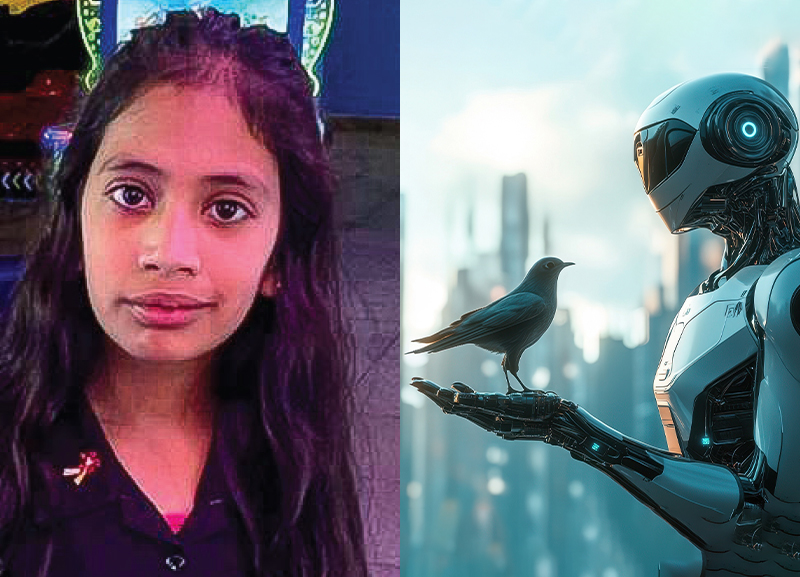
Prisha Uppal
Class 5, Delhi Public School, Ludhiana

I would use waste items such as used cans to create a robot that could operate on land, in water and in the air. This robot could locate waste or other toxic substances anywhere and help manage them safely. It would be programmed to collect and segregate the waste. Reusable waste would be processed and used to create new things. The robot would be equipped with wings that would give it an aerial view of the environment, enabling it to gather important information about its surroundings. I would also attach something behind the robot, enabling it to collect toxic materials from the sea. The robot would also help marine creatures in danger or birds entangled in wires by gently freeing them. In addition to this robot, I would create a special robot to help conservationists with activities such as planting trees.
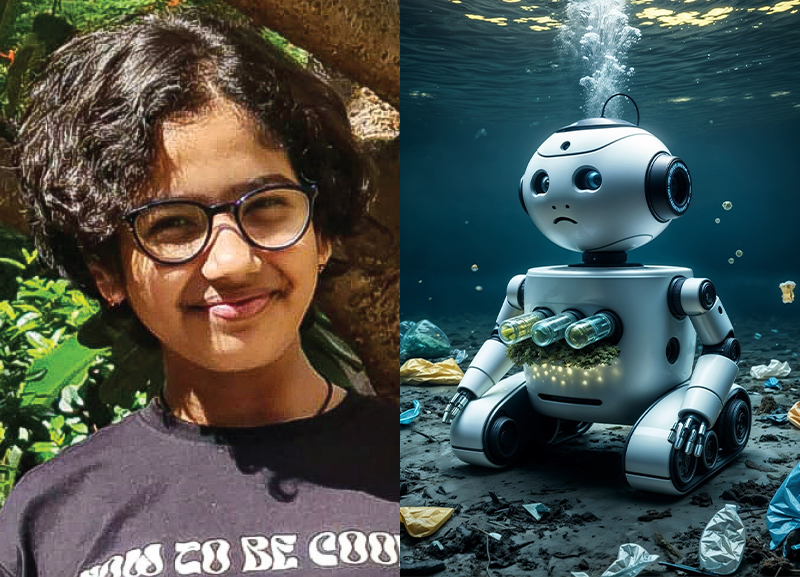
Sawinee Mukherjee
Class 7, Smt Sulochanadevi Singhania School, Thane

I would invent a robotic device that would attract microplastics, oils and other substances in the marine environment. I would send a squadron of these devices into the ocean and work on a technology that helps these devices attract plastic in the same way as magnets attract iron. This would prevent marine creatures from consuming and choking on harmful substances. I would also encourage people to use a compost pit for wet garbage. This compost would be used to enhance the quality of soil and help in afforestation, improving greenery.
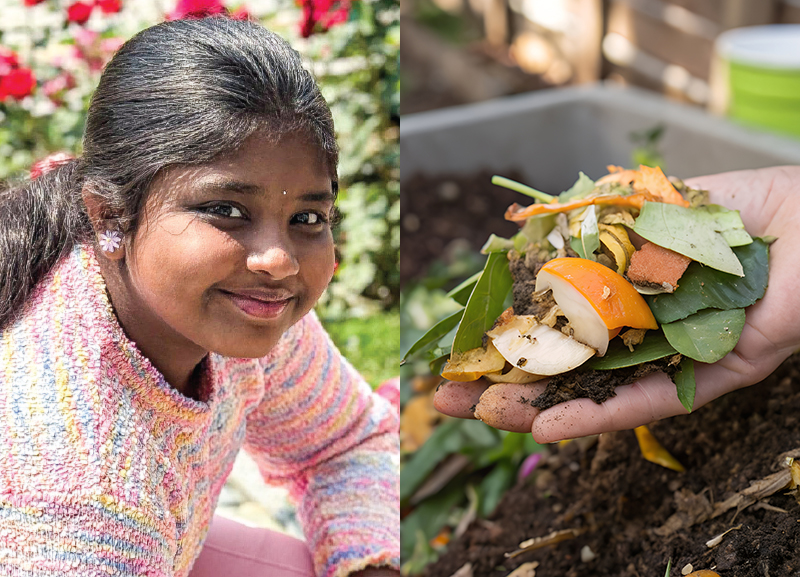
Sri Laasya Somisetty
Class 8, Tatva Global School, Hyderabad

I would create an ecofriendly machine that would conveniently convert waste into energy. Imagine a small, friendly machine sitting in the corner of your home, quietly turning your kitchen scraps like peels, leftovers and garden trimmings into something incredible—clean energy. It would not only keep smelly waste out of landfills, where it would otherwise release harmful gases, but would also power a lamp in your room or charge your devices. With every bit of waste it would process, it would give back to the planet instead of taking from it. This device would become your home’s silent eco-warrior, fighting pollution and reducing your carbon footprint, one banana peel at a time. This one machine would transform this world into an eco-friendly place, giving people a healthy lifestyle.
Swadha Avantsa
Class 8, Tatva Global School, Hyderabad

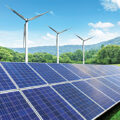
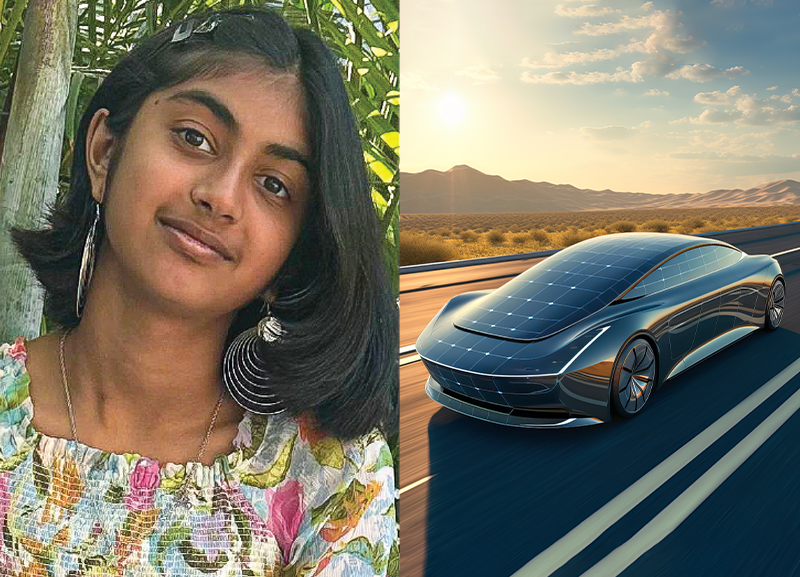
Although the concept of electric vehicles is prevalent, I think that solar-panelled vehicles would be better. If this vehicle is left in hot sunlight for an hour, it will be fully charged. This would prevent the wastage of fossil fuels. Though there are companies that have incorporated solar panels in vehicles, this concept is still uncommon. Even though this idea would cost a lot of money, I feel it is worth it if we can make Earth greener in the future.
Keisha Arora
Class 10, Greenwood High International School, Bengaluru

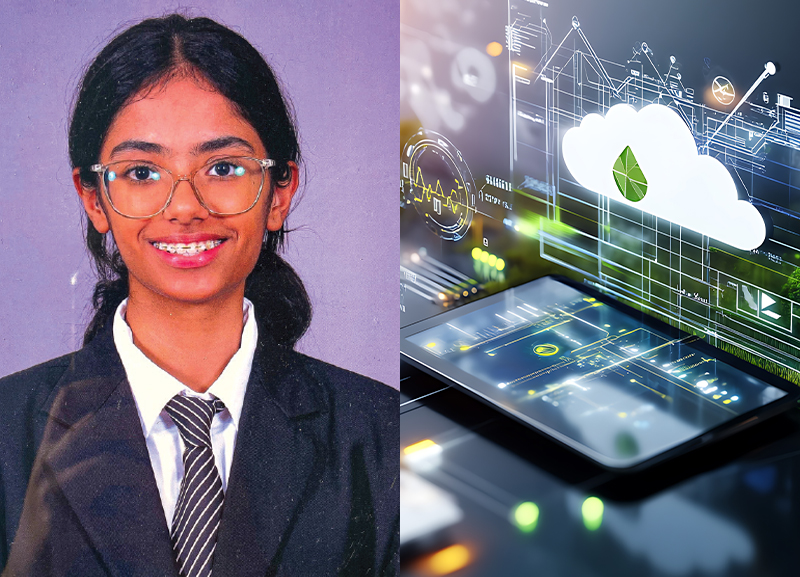
Phytoplankton are microscopic ocean organisms that feed marine animals and produce over 50% of Earth’s oxygen. While marine life is widely known to be under threat, the core issue lies in the alarming decline of phytoplankton due to ocean warming, acidification, plastic pollution and oil spills. To address this, I would like to invent artificial intelligence (AI)-powered devices with sensors that could be attached to boats or ships to monitor water temperature, pH, pollution and phytoplankton levels. These devices would connect to an app that maps ocean health in real-time to alert relevant authorities. Citizens would also have app access to report marine hazards with photos and locations.
REFLECTION: Green Earth
List 5 easy ways to help make the
Earth more green again.