

Persian Saffron Ice Cream

The Sanskrit medical dictionary, ‘Bhava Prakasha’, refers to saffron as kesara and kumkuma.

The Magic of Saffron

Ancient History
The Sanskrit medical dictionary, ‘Bhava Prakasha’, refers to saffron as kesara and kumkuma. From around 550 AD, saffron was cultivated in Kashmir—its historic Indian home. The Mughal emperor Jahangir records producing 500 ‘maunds’ of kesar, roughly 8,000kgs, comparable to India’s present output, which is the second highest after Iran. Yet Kashmiri saffron from Pampore remains the most prized, known for its elongated stigma, thick head and deep red colour.

Saffron’s journey to India traces back to Persia via the Silk Route. From Persia, saffron had earlier travelled west along the Royal Road to Greece. The Bible speaks of orchards growing saffron. Saffron was also used in the dyed wrappings of Egyptian mummies, valued for its astringent and skin-healing qualities. Alexander the Great recommended saffron baths to his soldiers. Romans perfumed roads with it to flaunt wealth and during the Black Death, Europeans prized it as a cure for plague.

Trade in this ‘gold of cuisine’ was fierce. Shipments were hijacked during the 13th- century Saffron Wars in Switzerland and strict protectionist laws emerged in 15th-century Nuremberg. It was smuggled into England, adulterated with turmeric in ancient China and so coveted that Tudor rulers banned courtiers from dyeing their hair with it.

Saffron Today

Hindus invoke Kesarinandan (a name given to Hanuman, son of Kesari), Jain devotees pour saffron milk over the towering Bahubali at Sravanabelagola in Karnataka and Buddhist monks dye their robes in its hue.

Saffron in the Indian Kitchen

From the sweetest jalebis to royal biryanis and pious shalianna to local sherbets, saffron has flavoured Indian cuisine across regions and rituals. The Mughals tinted their desserts–imarti, kulfi, shahi tukda and phirni–in its yellow-orange hue, while zafrani pulao owes its aroma to these delicate strands. In South India, kesari bhaat is offered to the gods and festive dishes like kheer, shrikhand, rabri and even rosewater are enriched with saffron for grace and fragrance.

DID YOU KNOW?

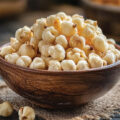
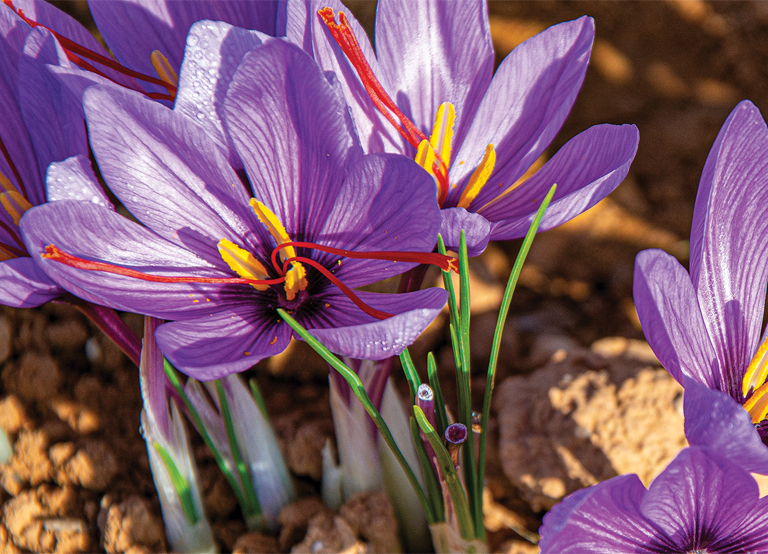
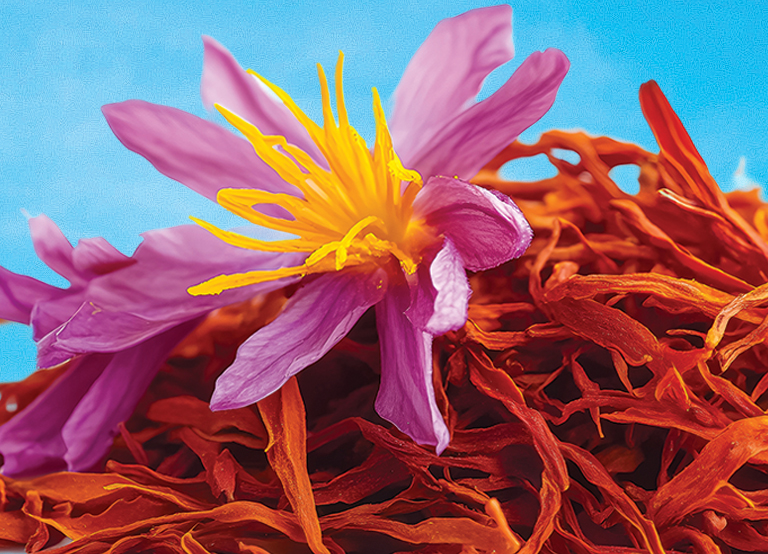
Saffron is the most expensive spice because har vesting demands precise weather and painstak ing labour—the stigma of 15,000 flowers needs to be handpicked to yield 1kg of saffron!

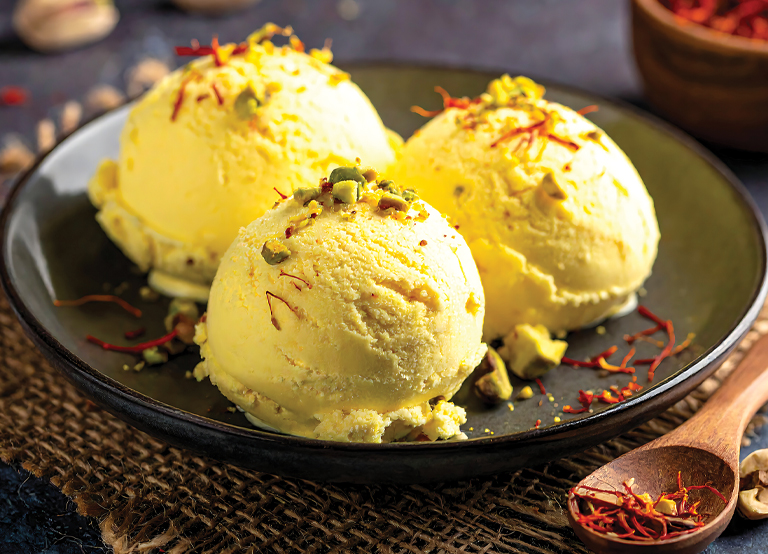
PERSIAN SAFFRON ICE CREAM

Persian Saffron Ice Cream

INGREDIENTS

  • 10 to 12 strands saffron
  • 2 cups full-fat milk
  • 1 cup fresh cream
  • ¾ cup sugar
  • 1 teaspoon cornflour
  • 1½ tablespoons rose water
  •  ½ teaspoon vanilla essence (optional)
  • 2 tablespoons finely chopped pistachios
  • 4 to 5 dried rose petals

METHOD

  • Lightly roast the saffron, crush it and soak it in 2 tablespoons of warm milk.
  • Heat the remaining milk. Add sugar and corn flour mixed in a little cold milk and stir until slightly thickened. 
  • Add the saffron milk, rose water and vanilla and cool it completely.
  • Whisk in the cream and freeze for 2 hours.
  • Whisk again, refreeze and repeat once more after 2 hours to prevent ice crystals.
  • Freeze until set. Garnish with pistachios and rose petals before serving.

Warning: Ask a parent or adult to help with this recipe. 

Anubhuti Sharma is a children’s publishing professional. She works with the Centre for Science and Environment, where she leads the Young Environmentalist website and steers Gobar Times, an environmental monthly magazine for young readers. She has previously worked with Oxford University Press, Cambridge University Press and Encyclopaedia Britannica. You can reach her at [email protected]

ACTIVITY: Plant Power!

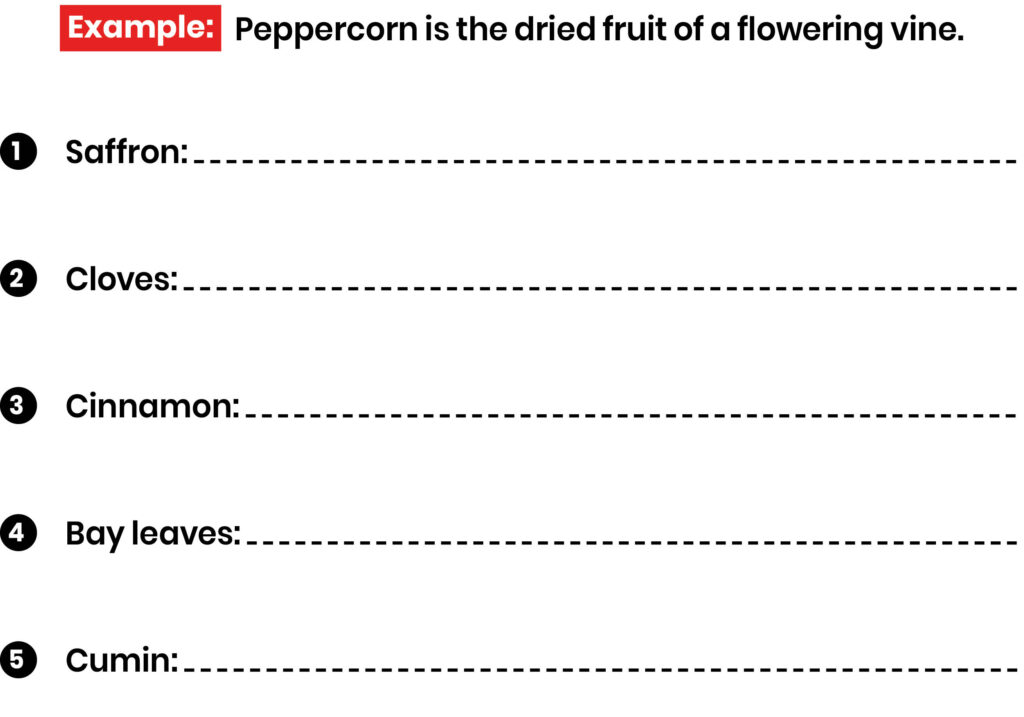
Name the source of the following spices.

Bookmark(0)
Share
How can I help you?