
History:
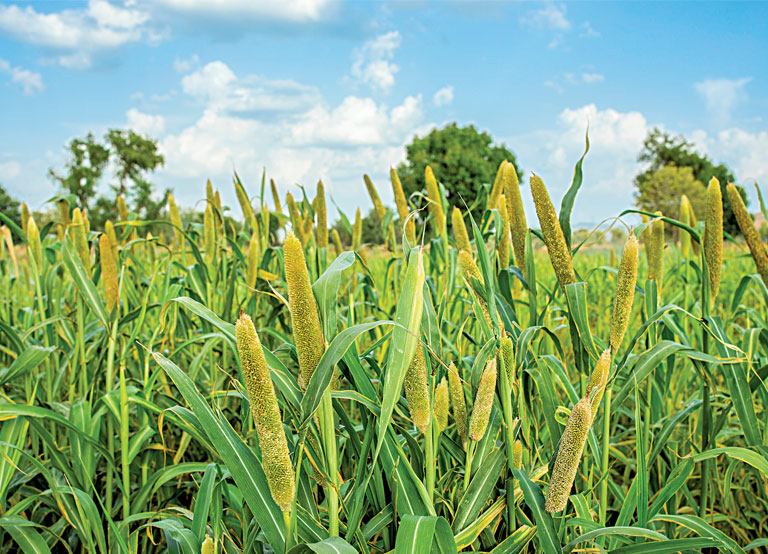
Bajra was first domesticated in the Sahel region of Africa more than 4,000 to 5,000 years ago. From there, it travelled to India and became a key crop in dry and semi-arid regions. Its exceptional tolerance to heat, poor soil and low rainfall made it a dependable grain for communities living in harsh climates. Over centuries, it became a staple in Rajasthan, Gujarat, Haryana and parts of Maharashtra.

Production in India
- Bajra mainly grows in Rajasthan, Uttar Pradesh, Gujarat, Haryana and Maharashtra.
- It is primarily grown during the kharif (monsoon) season but consumed mostly during winter for its warming properties.
- Recent millet-promotion programmes and the International Year of Millets 2023 have increased awareness and demand for bajra.
- Bajra is now used in flour mixes, breakfast cereals, bakery items and various health food products.
Culinary Uses
- Bajra flour is used to make rotis, khichdi, porridge and even baked snacks.
- Bajra rotis are commonly eaten with ghee, jaggery, garlic (lehsun) ki chutney, kadhi or seasonal vegetables.
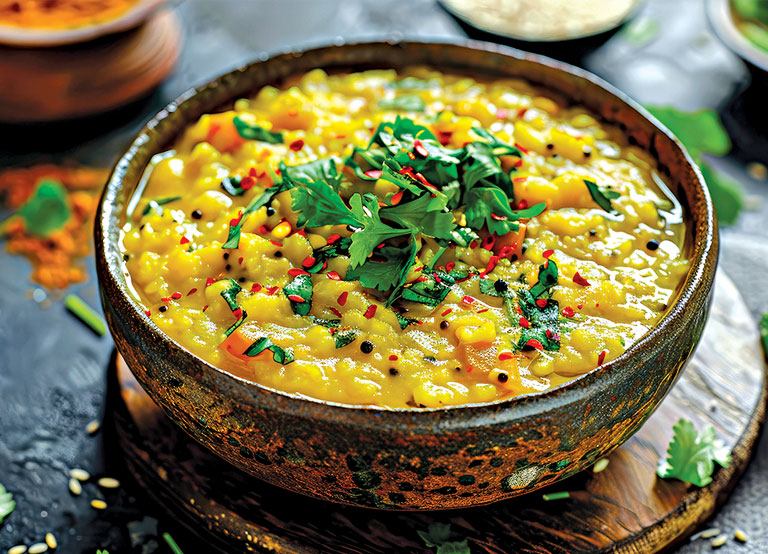
- Bajra khichdi is slow-cooked with dal, spices and ghee, making it a wholesome winter meal.
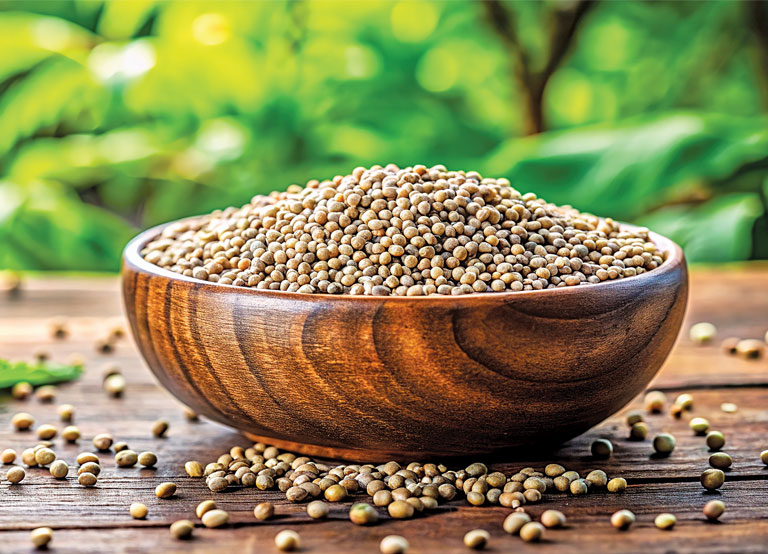
- A sweet bajra kheer is also made with the whole millet, milk and jaggery.
Regional Specialities
- Bajra Rotla (Gujarat): These thick rotis are usually made on a mud pan. They are served hot with ghee and jaggery or garlic chutney or butter, curd and sabzi.
- Bajra Khichdi (Rajasthan): A warm, nourishing winter dish made with bajra grains and moong dal.
- Bajra Raab (Gujarat): A traditional drink made with bajra flour, jaggery and ghee, known for its immunity-boosting benefits.
- Bajra Vada (Rajasthan): Crisp deep-fried patties made from bajra flour, green garlic, green onion and spices.

INTERESTING FACTS
- Bajra is one of the most drought-tolerant grains in the world.
- It is rich in iron, making it beneficial for improving haemoglobin levels.
- The grain, husk and stalk of the bajra plant are all used—for food, fodder and even fuel.

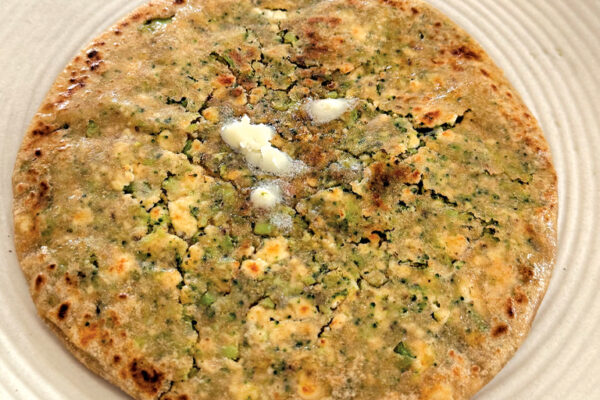
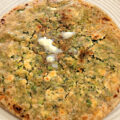
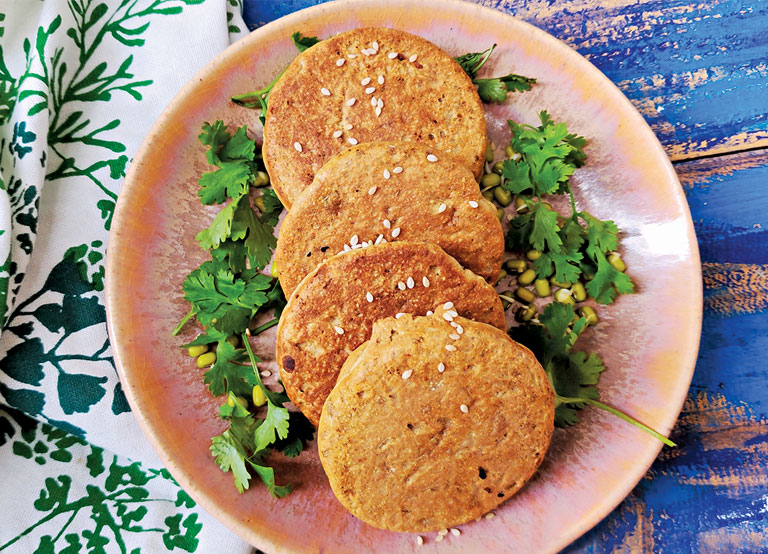
SAVOURY BAJRA PANCAKES
INGREDIENTS
- ¼ cup bajra flour
- 2 tablespoons sattu
- 2 tablespoons semolina (rawa)
- 1 tablespoon grated ginger
- 1 tablespoon grated garlic
- ½ teaspoon black pepper
- 1 tablespoon chaat masala
- 1 tablespoon cumin powder
- 1 teaspoon oregano
- ½ teaspoon salt
- 2 tablespoons chopped coriander
- 1 green chilli, chopped
- 1 onion, chopped
- 1 tomato, chopped
- ½ cup water
- ¼ teaspoon baking soda
- 1 tablespoon oil
METHOD
- To a bowl, add the bajra flour, sattu, semolina, ginger, garlic and all the dry masalas and mix well.
- Now add the water to make a pancake-consistency batter. Add the chopped coriander leaves, green chilli, onion and tomato and mix well.
- Heat a pan and smear it with some oil.
- Now add the baking soda to the mixture and mix it well. It will bubble up.
- Pour some batter on the pan and cover it. Cook it till it swells up and the underside is crisp and golden in colour.
- Flip it and cook the other side too.
- Serve with some chutney.
Warning: Ask a parent or adult to help with this recipe.
Recipe credit: Rakshita Dwivedi on Instagram @recipe_dabba
ACTIVITY: Fill in the Blanks
How well do you know bajra?

Share