

Bangalore Days
Chapter 1:
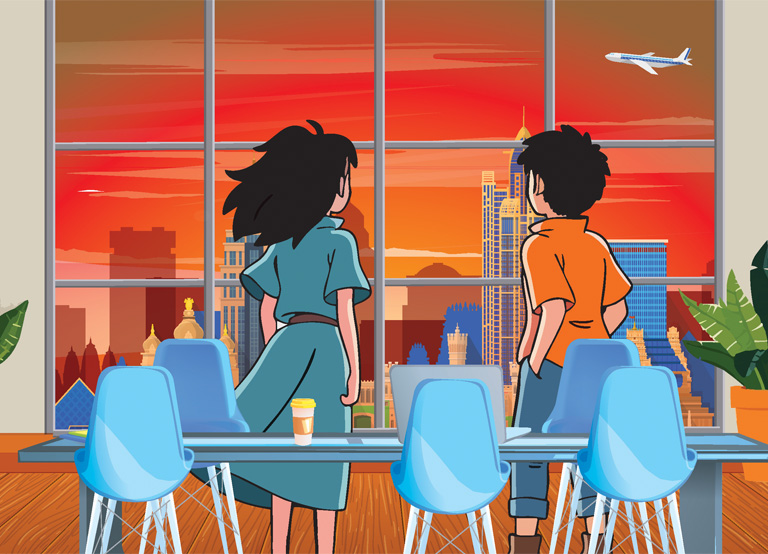
The Blood Dance Follows The air in Indiranagar was thick enough to swallow, a far cry from the thin, sharp ether of the Perlan observatory. Kiran sat in the dark, lit only by the twin glows of his tablets. His left hand, fluid and artistic, swept a stylus across a RAW image file, pulling the saturation out of the shadows to reveal the oxygen line—a red so deep it looked like an open wound in the sky. Simultaneously, his right hand clattered across a mechanical keyboard, refining a Python script that modelled the Lorentz force acting on charged particles.

“The math doesn’t lie, Ananya,” Kiran said, his voice a low rasp.
Ananya leaned against the doorframe, watching his hands move independently. “The math says auroras don’t happen at 12 degrees North latitude, Kiran. It’s physically impossible. The magnetic dip is too shallow.”
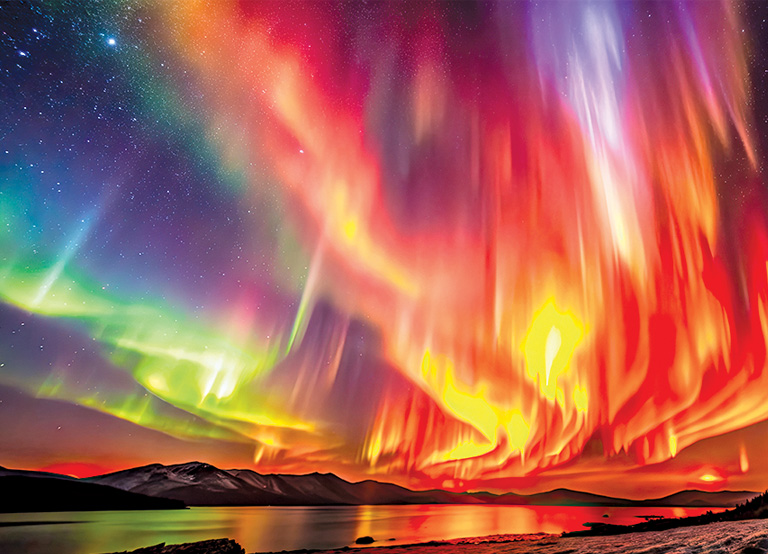
“It wasn’t a dip,” Kiran countered, merging the two screens. “It was a puncture.” He pointed to a spike in the flicker-rate of his Iceland footage. It wasn’t a random shimmer; it was a Fourier series. A sequence. At that moment, the streetlights outside his window hummed and died. Kiran stepped onto the balcony. Above the silhouette of the Vidhana Soudha, a ribbon of impossible crimson began to unfurl. The “Blood Dance” had found him in the tropics.
Chapter 2: The Latitudinal Breach
The city of Bengaluru, usually a cacophony of horns and engines, fell into a haunted silence. The red ribbon in the sky wasn’t just light; it was a structural anomaly. Kiran watched his magnetometer readings go haywire. The emission was occurring at an altitude of only 150kms—far lower than the thermosphere norm.
“Kiran, look at the GPS telemetry!” Ananya shouted from the desk. The satellite signals were refracting in a hexagonal pattern.

Kiran’s hands were a blur. His left hand operated a wide-angle lens, capturing the fractal branching of the red light, while his right hand traced the signal’s origin on a global map. Three points glowed: Reykjavik, Bengaluru and a lonely coordinate in the South Pacific.
“It’s a phased array,” Kiran whispered. “Something is using the oxygen in our atmosphere as a medium.
They’ve turned the planet into a giant liquid-crystal display. These aren’t just colours; they’re bits. We’re staring at a planetary-scale download.”
Chapter 3: The Indiranagar Node
As the red sky pulsed, a localised EMP effect began to ripple through the neighbourhood. Transformers blew like distant firecrackers, but Kiran’s office remained powered. The energy wasn’t coming from the grid; it was being induced directly into his hardware by the atmospheric resonance.
Kiran realised the “Deep Space Burst” from weeks ago wasn’t a message—it was a set of instructions. He used his left hand to stabilise a failing capacitor while his right hand frantically decoded the incoming stream.
“It’s a Biological Patch,” he told Ananya. He showed her the simulation. The Earth’s magnetosphere was thinning—a natural cycle accelerated by a coming solar super-storm. The red light was an artificial reinforcement. The “entities” weren’t invading; they were weaving a temporary shield into the ionosphere to prevent the sun from stripping away the ozone layer. The red was the “thread” of the needle.

Find the given words from the story, ‘Bangalore Days’.