When you watch a video online or send a message to a friend, how do you think the internet reaches you?
More than 95% of the world’s international internet traffic actually travels through fibre-optic cables lying on the ocean floor. These undersea cables connect countries and continents, carrying billions of messages, videos and online transactions every day.
So why do we use cables?
Think of internet data as water flowing through pipes. Fibre-optic cables are like giant superhighways that can carry enormous amounts of information at very high speeds. They are also relatively cheap to operate once they are built. This is why undersea cables remain the backbone of the global internet.
But cables have limitations. They are expensive to install, difficult to extend into remote regions and can occasionally be damaged by earthquakes, fishing equipment, ship anchors or even during wars. In the past, cable breaks near the Red Sea have affected internet connections thousands of kilometres away.
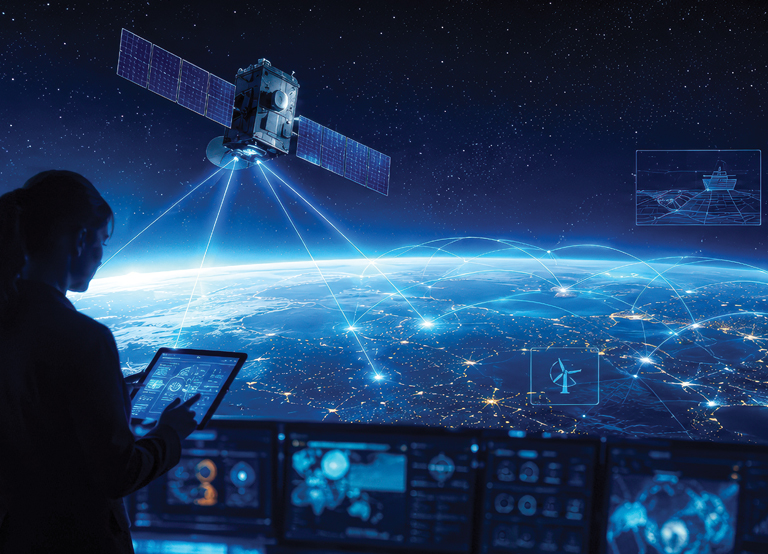
This is where Starlink comes in. Instead of sending data through cables, Starlink uses thousands of satellites orbiting close to Earth, known as Low Earth Orbit (LEO) satellites. These satellites can bring internet access to remote villages, mountains, deserts and islands where laying cables may be difficult or impossible.
However, satellites are not likely to replace cables completely. While Starlink is much faster than traditional satellites, fibre-optic cables can still carry far more data and often with lower latency.
For India, satellite internet could be a game-changer for rural education, telemedicine, digital banking and disaster response. At the same time, policymakers must balance these benefits with concerns about security, regulation and dependence on foreign-owned networks.
The future of the internet may not be a choice between cables and satellites. Instead, it could be a combination of both—working together to connect every corner of the world.